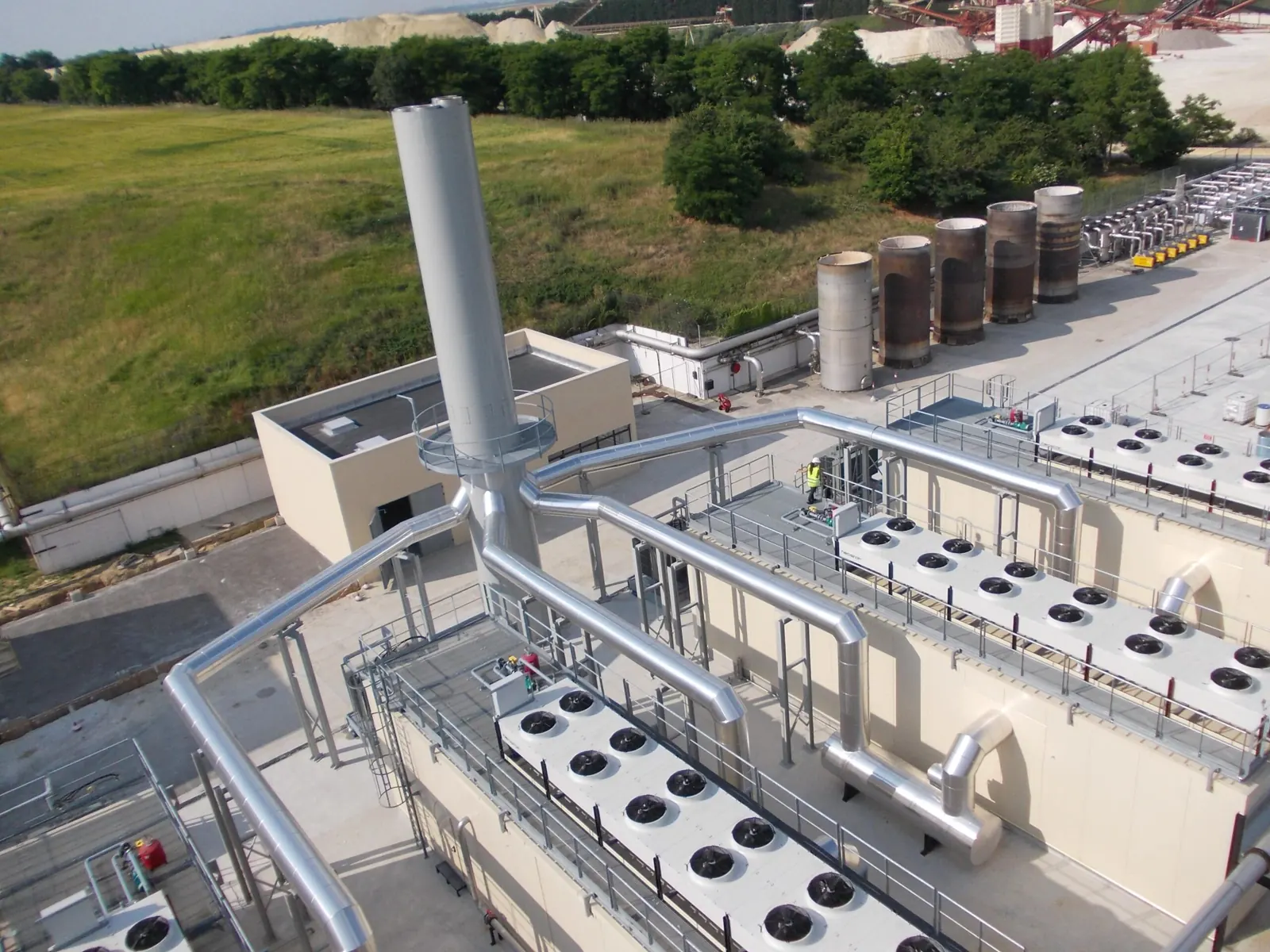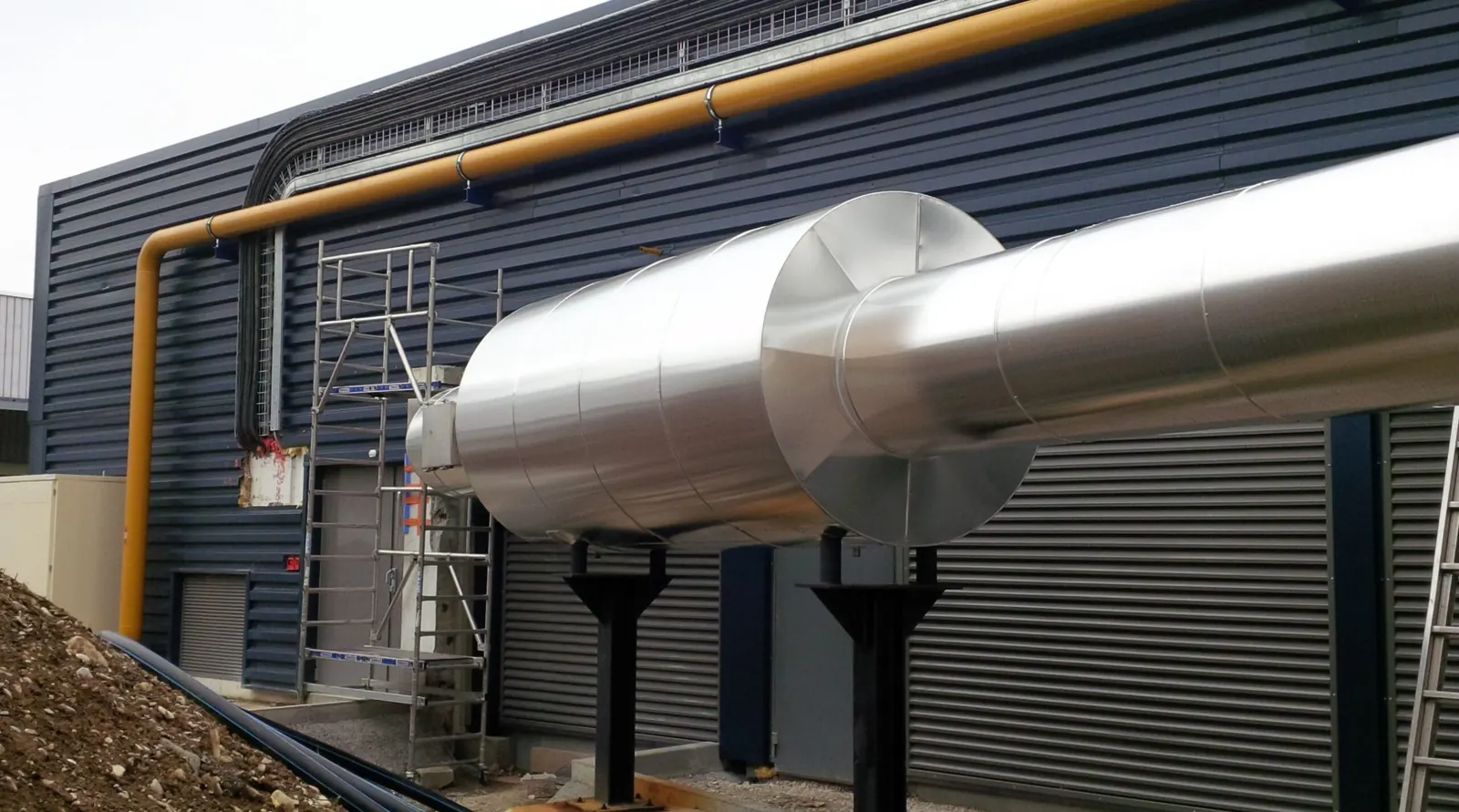

Condensation aims to recover as much as possible of the heat escaping in the flue gases in order to increase the performance of the heating installation.
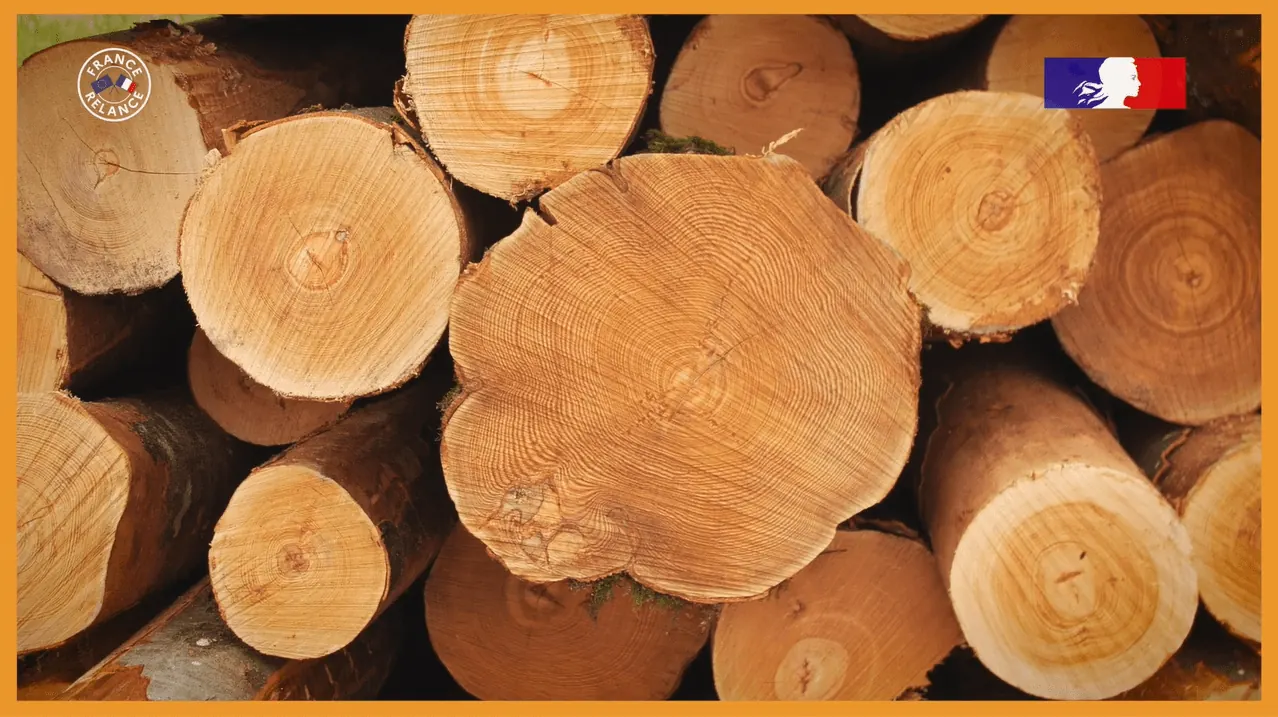
This principle has been successfully applied in natural gas boilers, with a heat recovery potential* of around 10%, equivalent to the heat contained in the water vaporised by combustion. In medium- and high-output wood-fired boiler plants, the moisture in the fuel creates an enormous recovery potential, sometimes reaching 100% of the generator's output…
Most of the power that was necessarily consumed to evaporate the water contained in the fuel can be recovered through the reverse phase change: condensation of water vapour, which releases its heat as it turns back into liquid. This happens at a temperature that, depending on various parameters, lies roughly between 55 °C and 65 °C: the well-known “dew point”.
To take advantage of this natural property, a “receiving” fluid is needed at a temperature low enough to cool the vapour down to its dew point. This receiving fluid – typically the return water of the heating network – is itself heated in the exchange, to a temperature approaching the dew point.
This shows how important it is, for the performance of a wood-fired boiler plant, to have the lowest possible network return temperature. As it happens, this requirement on the boiler side converges with the requirements of thermal efficiency on the network side: together with the International Energy Agency and ADEME, energy performance stakeholders are now calling for a higher “Delta T”, the main indicator of a network's thermal efficiency.
This means that, with the network supply temperature adjusted to demand (85 °C, for example), the network will be all the more efficient as the return water gives up more of its heat. Currently available techniques easily achieve temperature differences of 40 °C or more – in our example, a network return at 45 °C. This approach is essential for the efficiency of all existing and new hot water networks.
Converging performance
Improving network performance by increasing the Delta T brings immediate benefits (lower losses, savings on pump consumption, higher capacity for a given pipe section); it also boosts the performance of the biomass boiler plant, of which flue gas condensation is a major factor.
The combination of a high Delta T network, a wood-fired boiler plant and energy recovery by condensation is efficient, reliable and environmentally responsible. It has been widely proven in the Scandinavian countries, where it has been developing since the early 2000s.
It applies to:
- energy production for district heating networks,
- collective residential and commercial buildings,
- industry, with spectacular results in air drying,
- certain agricultural applications, such as greenhouses.
Discover the TerraoSave energy recovery and filtration solution.
* The heat recovery potential is the difference between the net calorific value (NCV) and the gross calorific value (GCV).