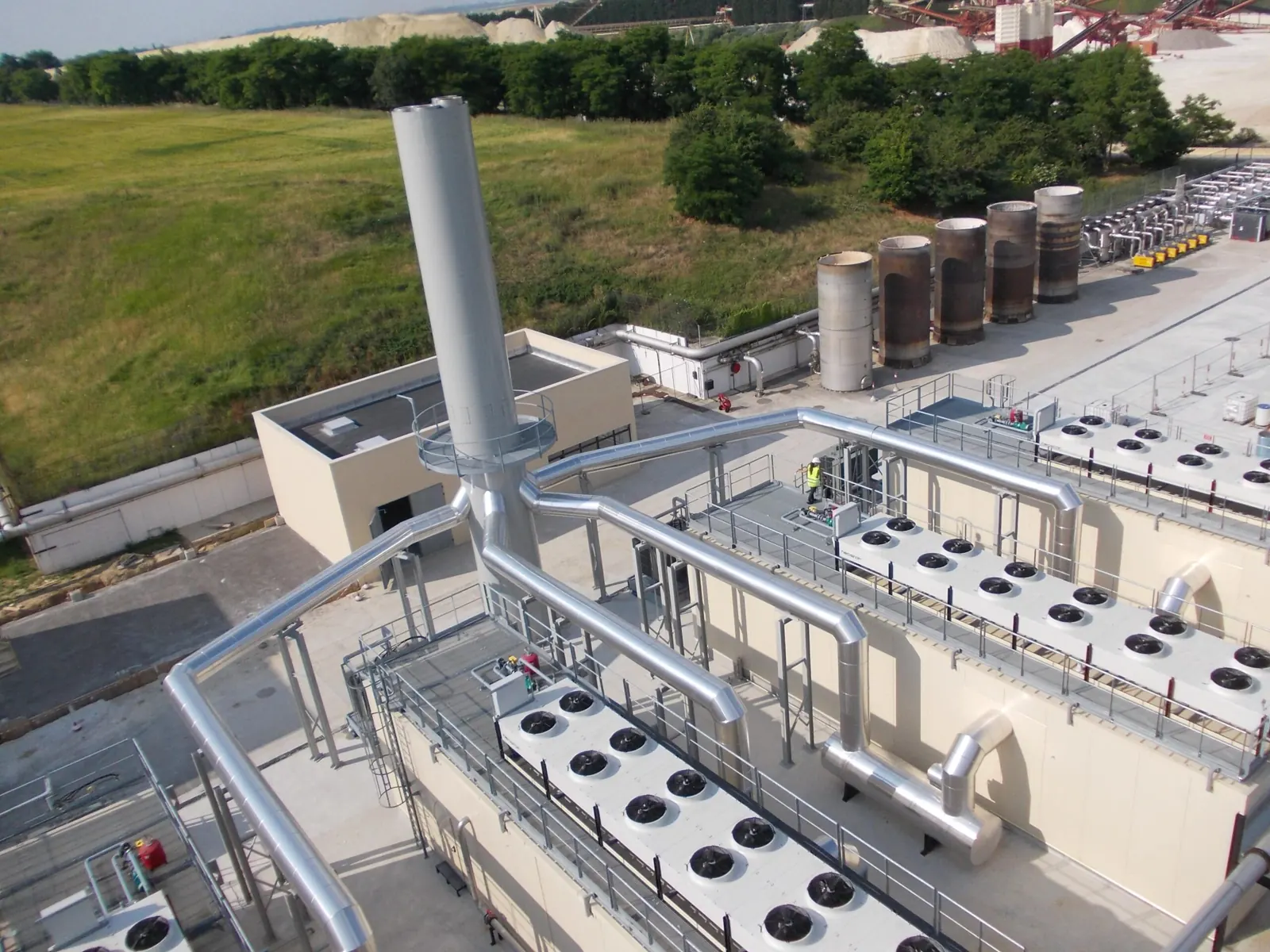
Industrial installations are getting ever closer to urban and suburban areas. Noise levels must be one of the criteria for their integration into the landscape and their acceptance by local residents (alongside architecture, renewables, social aspects, etc.).
Noise pollution is therefore a major issue in any project, whether in industrial processes or in thermal or electrical power generation. The increased performance and compactness of generators have contributed to a rise in noise problems around installations. Yet effective solutions exist for every generator: boiler, turbine, engine, fan… These generators require acoustic treatments that differ from standard off-the-shelf solutions.
Choosing the best solutions for the constraints of each installation
First, a study must be carried out that takes into account the site constraints and the environmental requirements of the French order of 23 January 1997.
And while there is no universal solution to noise treatment, BEIRENS relies on the right combination of technologies to achieve the required performance. In all cases, it is best to address noise issues at the preliminary design stage, when the means of dealing with them can be fully controlled. Data from generator manufacturers (burners, boilers, fans, engines, turbines…) should therefore be obtained as early as possible. In the absence of reliable data, space should be reserved for a silencer with suitable access.
The cost of this equipment often lies not in its manufacture but in fitting it into an installation that was not designed for it. That is why an exhaust system should be designed from the outset with integrated acoustic treatment, or be “ready” to receive suitable acoustic treatment after commissioning, depending on the results of the acoustic assessment. Based on the acoustic spectrum at the generator outlet, a combination of acoustic treatments must be defined to achieve the necessary attenuation, together with a commitment on pressure drop.
Good practice to follow
1. Guaranteed results
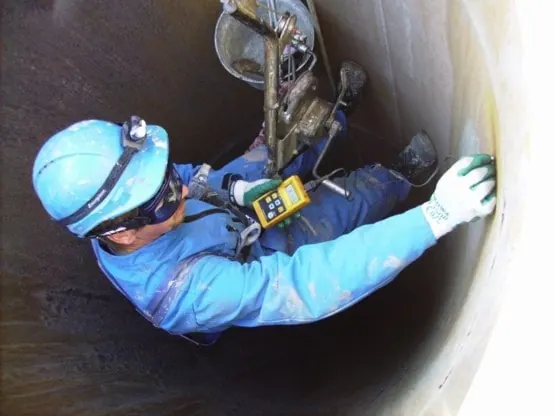
Guarantee acoustic performance and mechanical strength over time. Several technologies can be used and combined to achieve the desired results: reactive silencers (single and double chamber resonators, quarter-wave resonators, Helmholtz resonators) and/or absorptive silencers (absorbent walls, bulbs, baffles). Both treatments can be combined depending on the acoustic problem.




2. Advice and expertise
First analyse and identify the noise sources and propagation paths. Adjustments at the source (burners, fans) often already deliver significant results and help optimise the choice of acoustic treatment. Draw on solid experience in gas dynamics, structural vibration and acoustics.
3. Reliability
Understand operating constraints and design the treatment according to the type of generator, taking into account the characteristics of the fluid to be discharged (temperature, velocity, pressure, nature of pollutants). Then adapt the shapes, materials, density of the acoustic insulation and its mechanical protection.
4. Optimised pressure drop
Define specific designs (casing shape, leading edge, trailing edge, flow cone) to minimise pressure drop and thus optimise the efficiency of the installation.
5. Careful aesthetic finishes
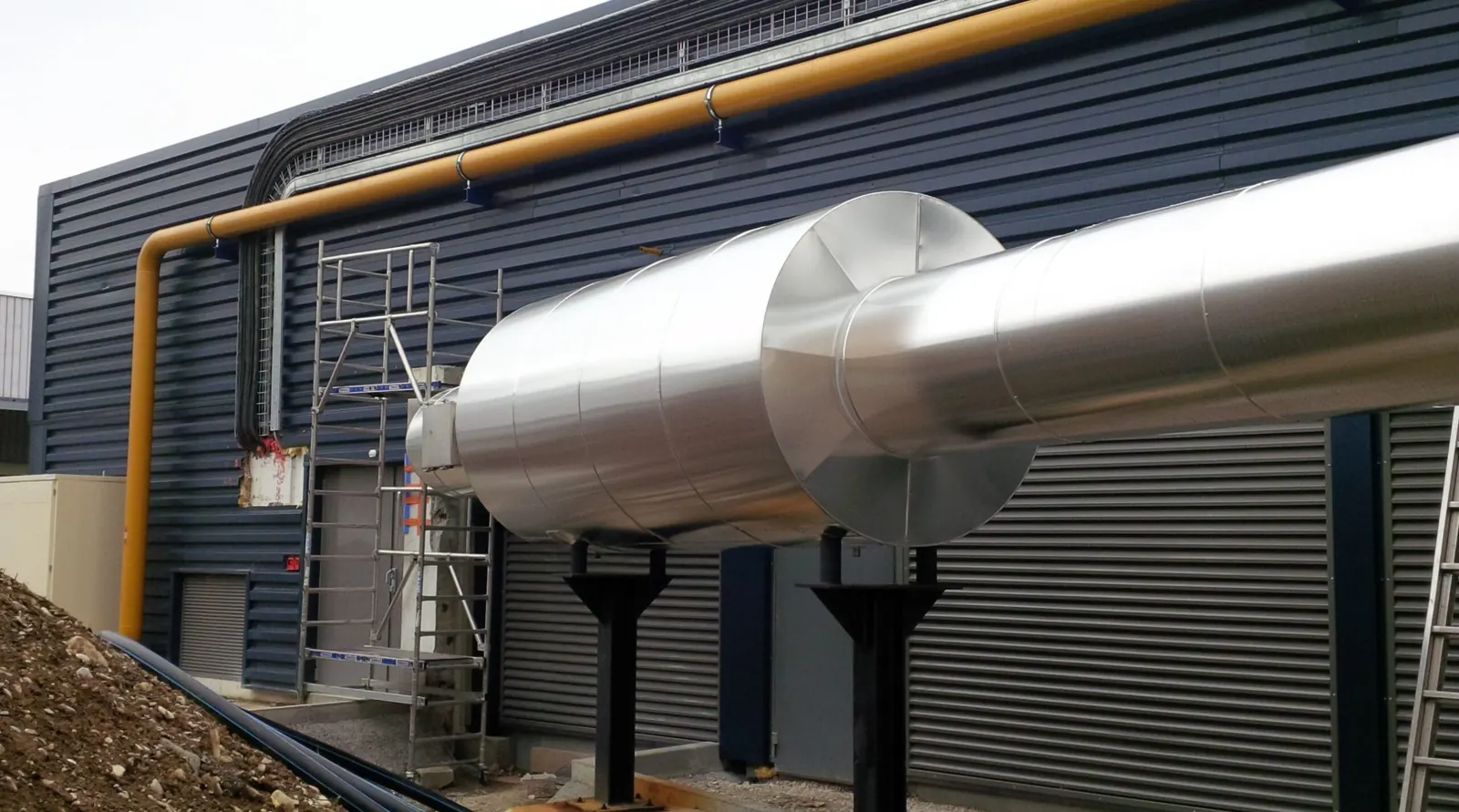
Pay particular attention to the appearance of the silencer and its seamless integration into the environment. A silencer can be clad in a raw aluminium jacket or mirror-polished stainless steel, and the whole can be painted.
Applying the fundamentals of acoustics to industrial exhaust systems is a daily challenge for which Beirens is recognised at European level. We continue our research and development to find new solutions. The latest is a standard, compact silencer for emergency generator sets: broadband efficiency, compactness and cost savings! We will tell you more about it in a future article.
See also: our acoustic treatment solutions.
Looking for quality information on exhaust systems and flue gas treatment? Follow our LinkedIn page.